
Benefits of eCommerce Website for Small Business
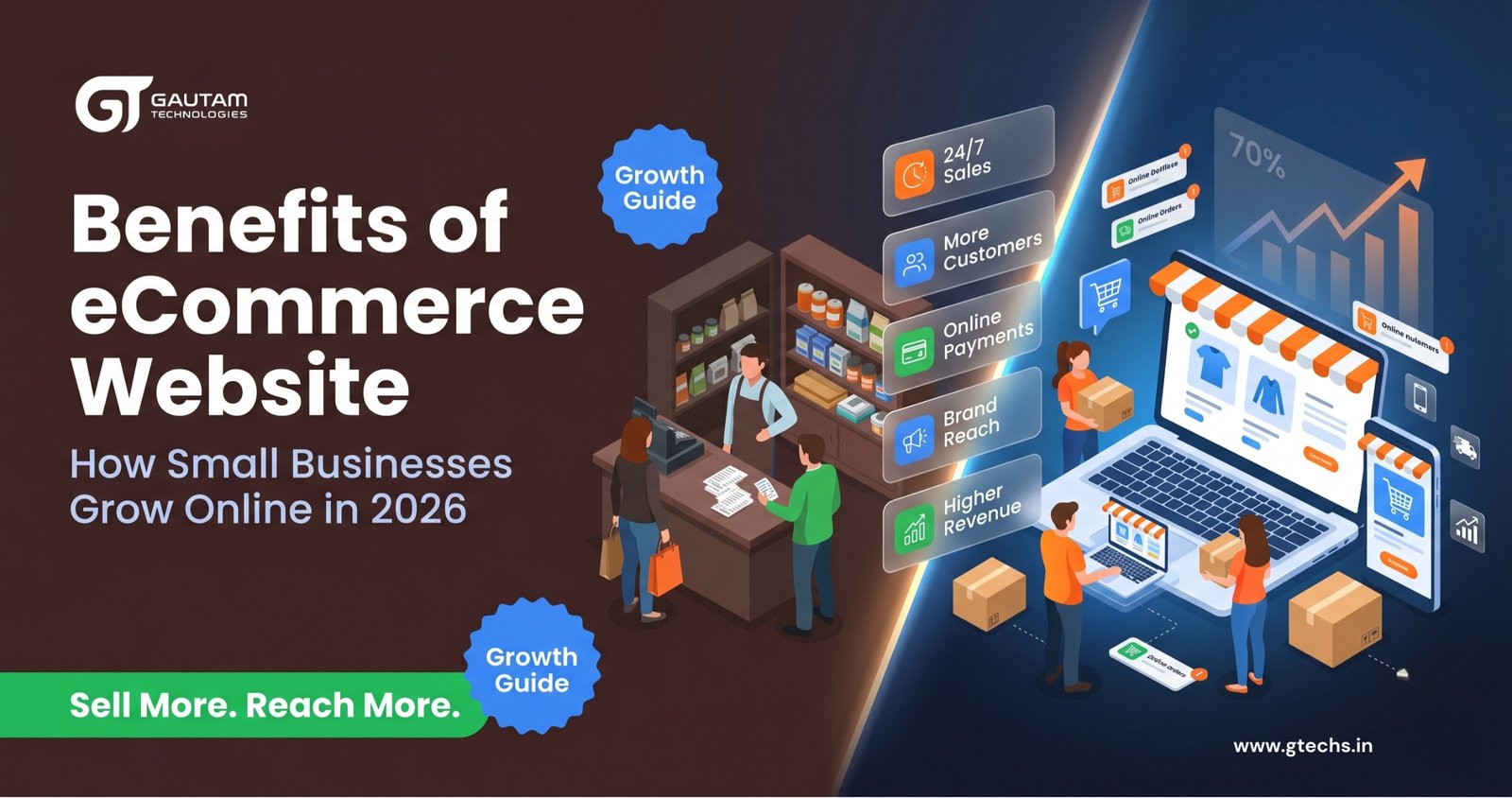
Benefits of eCommerce Website for Small Business
Authored by
Ravi
Date Released
3rd May, 2026
The way customers discover and purchase products has changed significantly, with more people choosing to shop online for convenience and variety. For small businesses, this shift creates a valuable opportunity to grow beyond local markets and reach a wider audience. An eCommerce Website allows businesses to showcase products or services, attract online customers, and generate sales without the limitations of a physical store.
With an eCommerce Website, your business can operate 24/7, enabling customers to browse and purchase at any time. This not only enhances customer experience but also increases revenue potential. It also helps reduce operational costs such as rent, utilities, and staffing, making it a cost-effective solution for startups and small enterprises.
Additionally, a well-designed eCommerce Website supports digital marketing, provides valuable customer insights through analytics, and strengthens brand credibility, helping you scale efficiently and stay competitive.
What is an eCommerce Website?
An eCommerce Website is a digital platform that allows businesses to sell products or services online to customers across different locations. It serves as a virtual storefront where users can browse product listings, view detailed descriptions, compare prices, and make purchases easily. These platforms include essential features such as a shopping cart, secure payment gateways, and order management systems to ensure smooth transactions. They also help businesses manage inventory, track customer activity, and process orders efficiently. By providing a convenient and user-friendly shopping experience, it enables businesses to reach a wider audience and grow their sales online.
Types of eCommerce Models (Detailed Explanation)
Understanding different eCommerce models helps businesses choose the right strategy based on their products, target audience, and growth goals.
1. B2C (Business to Consumer)
In the B2C model, businesses sell products or services directly to individual customers. This is the most common type of online selling, where users visit a website, browse products, and make purchases for personal use. Examples include clothing stores, electronics shops, and online grocery platforms. The focus here is on user experience, fast delivery, and attractive pricing.
2. B2B (Business to Business)
The B2B model involves transactions between businesses. Companies sell products or services in bulk to other businesses rather than individual consumers. This model is common in wholesale, manufacturing, and software services. It usually involves larger order values, long-term relationships, and customized pricing.
3. D2C (Direct to Consumer)
In the D2C model, brands sell directly to customers without relying on third-party retailers or distributors. This approach gives businesses full control over pricing, branding, and customer experience. It also allows companies to build stronger relationships with customers and collect valuable data.
4. Marketplace Model
A marketplace connects multiple sellers and buyers on a single platform. The platform owner does not always sell products but provides a space for vendors to list their items. Popular examples include multi-vendor platforms where customers can compare products from different sellers in one place. This model offers variety and competitive pricing for customers.
A well-designed eCommerce Website supports all these models by providing a smooth and seamless shopping experience. It ensures easy navigation, secure transactions, and efficient order management, making it simple for customers to browse, purchase, and interact with your brand.
Why Small Businesses Need an eCommerce Website
An eCommerce Website gives small businesses a powerful way to scale without heavy investment. It removes location barriers, allowing you to attract customers from different cities or countries while running your business continuously. Compared to traditional stores, it lowers expenses and improves efficiency. It also helps build a professional brand image that customers trust. Through customer data and insights, businesses can refine their strategies and improve sales performance. Most importantly, it offers a smooth and time-saving shopping experience, which today’s customers expect, helping businesses grow faster and stay ahead in a competitive market.
Key Reasons
- Increased internet and smartphone usage
- Growth of online payments and digital wallets
- Demand for doorstep delivery
- Rising competition in local markets
Small businesses can now compete with larger brands by leveraging the power of digital platforms.
Top Benefits of eCommerce Website for Small Business
1. Wider Market Reach
One of the biggest advantages of an eCommerce Website is the ability to reach customers beyond your local area. Instead of relying only on foot traffic, you can sell products across cities, states, or even globally.
This expanded reach opens new revenue opportunities and helps businesses scale faster.
2. 24/7 Business Availability
Unlike physical stores, an eCommerce Website operates 24/7, allowing customers to browse and purchase products at any time. This continuous availability increases convenience and significantly boosts sales potential.
This is especially beneficial for small businesses that cannot afford extended store hours or additional staff.
3. Cost-Effective Operations
Running an online store is significantly more affordable than maintaining a physical outlet.
Cost Savings Include:
- No rent or utility expenses
- Reduced staffing costs
- Lower inventory management costs
An eCommerce Website allows small businesses to start with minimal investment while maximizing returns.
4. Improved Customer Experience
A well-optimized eCommerce Website enhances user experience through:
- Easy navigation
- Fast loading speed
- Mobile-friendly design
- Secure checkout
Customers can quickly find products, compare options, and complete purchases in minutes.
5. Better Data and Analytics
An eCommerce Website provides valuable insights into customer behavior, such as:
- Purchase patterns
- Popular products
- Customer demographics
These insights help businesses make informed decisions, improve marketing strategies, and increase conversions.
6. Increased Sales and Revenue
Online stores offer multiple ways to boost revenue:
- Upselling and cross-selling
- Discounts and promotions
- Personalized recommendations
With the right strategies, an eCommerce Website can significantly increase your sales.
7. Strong Brand Presence
Having a professional eCommerce Website builds trust and credibility. Customers are more likely to trust businesses with a strong online presence.
It also allows you to showcase your brand story, values, and unique selling points.
Key Features Every eCommerce Website Should Have
To build a successful online store, it is important to include essential features that improve user experience, increase trust, and drive conversions. A well-structured eCommerce Website not only attracts visitors but also converts them into loyal customers by offering speed, security, and convenience.
1. Mobile Responsiveness
Mobile responsiveness ensures that your website works smoothly on smartphones, tablets, and desktops. Since most users shop on mobile devices, your site must automatically adjust to different screen sizes.
Benefits:
- Better user experience across all devices
- Lower bounce rate and higher engagement
- Improved rankings due to mobile-first indexing
Real-Life Example:
A local fashion store optimized its mobile design and saw higher traffic and increased sales from mobile users.
2. Secure Payment Gateway
A secure payment system protects customer data and ensures safe online transactions. Using trusted gateways builds confidence during checkout.
Benefits:
- Builds customer trust and credibility
- Reduces cart abandonment
- Protects sensitive payment information
Real-Life Example:
An electronics shop added secure payment options like UPI and cards, leading to more successful transactions.
3. Fast Loading Speed
Website speed plays a crucial role in retaining visitors. A slow website can lead to lost customers and reduced sales.
Benefits:
- Faster user experience
- Higher conversion rates
- Better SEO performance
Real-Life Example:
A grocery website improved loading speed and saw a noticeable increase in customer retention.
4. User-Friendly Interface
A simple and clean interface helps users easily navigate and find products. Clear categories and search options improve usability.
Benefits:
- Higher customer satisfaction
- Increased time spent on site
- Better conversion rates
Real-Life Example:
An online bookstore improved navigation and saw more product views and purchases.
5. SEO Optimization
SEO helps your website appear in search results when customers look for products online. It includes keyword optimization and content structuring.
Benefits:
- More organic traffic
- Higher visibility on search engines
- Long-term growth without ads
Real-Life Example:
A handmade products seller optimized content and started getting consistent traffic from Google.
How an eCommerce Website Helps in Business Growth
An eCommerce Website plays a crucial role in accelerating business growth by expanding market reach and increasing sales opportunities. It allows businesses to connect with customers beyond local boundaries and operate continuously without time limitations. By integrating digital marketing strategies like SEO, social media, and email campaigns, businesses can attract targeted traffic and boost conversions. It also provides valuable customer data and insights, helping improve decision-making and marketing effectiveness. Additionally, features like personalized offers and easy checkout enhance customer experience and retention. Overall, it creates a scalable and cost-efficient platform for long-term business success.
1. Scalability
An eCommerce Website allows you to expand your product range and customer base without major investments.
2. Digital Marketing Integration
You can integrate:
- SEO (Search Engine Optimization)
- Social media marketing
- Email campaigns
- Paid advertising
This improves visibility and drives targeted traffic.
3. Customer Retention
Online platforms make it easier to retain customers through:
- Loyalty programs to reward repeat customers and increase retention
- Email marketing to engage customers with updates and promotions
- Personalized offers based on customer behavior and preferences
- Discount campaigns and special deals to encourage repeat purchases
Repeat customers contribute significantly to long-term growth.
Challenges of eCommerce Website (and Solutions)
eCommerce website challenges center on intense competition, data security concerns, and rising user expectations. Businesses often struggle with high cart abandonment, slow website performance, and building customer trust. To overcome these issues, companies focus on AI-driven personalization to enhance user engagement, streamlined mobile checkout to reduce friction, and strong security protocols to protect customer data. Improving website speed and simplifying the checkout process also play a crucial role in increasing conversions. By addressing these challenges effectively, businesses can create a better user experience, build trust, and achieve consistent growth in a competitive online marketplace.
1. High Competition
The online market is highly competitive, with many businesses offering similar products or services. Standing out can be difficult, especially for small businesses trying to attract attention.
Solution:
Focus on niche targeting to serve a specific audience with unique needs. Build a strong brand identity through consistent design, messaging, and value proposition. Implement effective SEO strategies to improve visibility on search engines and attract organic traffic.
Benefit:
Helps differentiate your business, attract the right audience, and improve long-term growth.
2. Security Concerns
Customers are often worried about sharing personal and payment information online. Any security issue can damage your reputation and lead to loss of customers.
Solution:
Use SSL certificates to encrypt data and ensure secure browsing. Integrate trusted and reliable payment gateways. Follow proper data protection practices to safeguard customer information.
Benefit:
Builds customer confidence, reduces risk of fraud, and increases successful transactions.
3. Building Customer Trust
Without physical interaction, customers may hesitate to trust a new online store. Lack of credibility can affect sales and conversions.
Solution:
Display customer reviews and testimonials to show real experiences. Maintain transparent policies for returns, shipping, and refunds. Provide clear contact information and responsive customer support.
Benefit:
Enhances credibility, improves customer satisfaction, and encourages repeat purchases.
Tips to Build a Successful eCommerce Website
To build a successful online store, focus on creating a smooth, secure, and user-friendly experience for your customers. A well-optimized platform not only attracts visitors but also converts them into loyal buyers and supports long-term business growth.
1. Focus on User-Friendly Design
A clean and simple design helps users easily navigate your website and find products quickly. Clear categories, search options, and easy navigation improve user experience and increase engagement.
2. Optimize for Mobile Devices
Most customers shop using smartphones, so your website must be fully responsive. A mobile-friendly design ensures better usability, faster browsing, and higher conversion rates.
3. Improve Website Speed
Fast loading speed is essential to retain visitors and reduce bounce rates. Optimize images, use reliable hosting, and minimize unnecessary code to improve performance.
4. Use High-Quality Product Images & Descriptions
Clear images and detailed product descriptions help customers make confident buying decisions. This reduces returns and increases trust in your brand.
5. Implement Secure Payment Options
Providing safe and trusted payment methods builds customer confidence. Use SSL certificates and reliable payment gateways to ensure secure transactions.
6. Optimize for SEO
Use proper keywords, meta tags, and structured content to improve search engine visibility. This helps drive organic traffic and reduces dependency on paid ads.
7. Simplify the Checkout Process
A complicated checkout process can lead to cart abandonment. Keep it simple, fast, and user-friendly to improve conversions.
8. Provide Excellent Customer Support
Offer quick support through chat, email, or phone to resolve customer queries. Good support builds trust and encourages repeat purchases.
Future of eCommerce for Small Businesses
AI and Automation
The future of online business is strongly influenced by artificial intelligence and automation. These technologies help businesses deliver personalized shopping experiences by analyzing customer behavior and preferences. Features like chatbots provide instant support, improving response time and customer satisfaction. Automation also helps manage inventory, marketing campaigns, and customer interactions more efficiently, leading to higher conversions and better overall performance.
Mobile Commerce
Mobile commerce continues to grow as more users prefer shopping through smartphones. A mobile-optimized eCommerce Website ensures smooth navigation, fast loading speed, and a seamless checkout process. This improves user experience and increases the chances of conversions, as customers can easily browse and purchase products anytime, anywhere.
Voice Search Optimization
With the increasing use of voice assistants, voice search is becoming an important factor in online visibility. Businesses need to optimize their content using natural language and question-based queries to match how users speak. This helps improve search rankings and makes it easier for customers to find products quickly.
Augmented Reality (AR)
Augmented Reality is transforming online shopping by allowing customers to visualize products before buying. Whether it is trying on clothes virtually or placing furniture in a room, AR enhances confidence in purchasing decisions. This reduces return rates and improves customer satisfaction, making it a valuable feature for future-ready businesses.
Why Choose Gautam Technologies for eCommerce Website
Gautam Technologies is a trusted digital solutions provider that helps businesses grow with innovative, scalable, and result-driven services. With a strong focus on quality, performance, and customer satisfaction, the company delivers tailored solutions that meet unique business needs. Backed by 10+ years of industry experience, the team understands real business challenges and builds solutions using modern technologies, user-friendly design, and strategies focused on long-term success.
Key Reasons to Choose Gautam Technologies
- Complete digital solutions including website, mobile app, CRM, and eCommerce development
- SEO-friendly and high-performance platforms for better visibility
- Customized solutions based on business goals
- Use of latest technologies for security and scalability
- Customer-first approach with dedicated support
- Affordable pricing for startups and small businesses
- Trusted by 50+ growing businesses across India
Conclusion
An eCommerce Website is a powerful tool that enables small businesses to grow, compete, and succeed in today’s digital marketplace. From expanding your reach to improving customer experience and increasing revenue, the benefits are undeniable.
Investing in a well-designed and optimized eCommerce Website can transform your business and open doors to new opportunities. If you want to stay competitive and future-ready, now is the time to go digital.
Ready to Grow Your Business Online?
Take your business to the next level with a powerful and scalable online store built by experts. Gautam Technologies helps startups and small businesses achieve real growth with high-performance digital solutions tailored to their needs.
Get started today and turn your idea into a successful online business. Call: +91 75218 8485 | Email: thegtechs@gmail.com
Frequently Asked Questions (FAQs)
1. Why is an eCommerce Website important for small businesses?
It helps businesses reach a wider audience beyond local areas and sell products online efficiently. It also reduces operational costs and increases sales opportunities through digital channels.
2. How much does it cost to build an online store?
The cost depends on features, design, and level of customization required. However, it is usually more affordable compared to setting up and managing a physical store.
3. Can small businesses compete with big brands online?
Yes, with the right marketing strategies, SEO, and customer experience, small businesses can compete effectively. Focusing on niche markets and quality service can make a big difference.
4. What features are essential for an online store?
Important features include mobile-friendly design, secure payment options, fast loading speed, and easy navigation. These elements ensure a smooth and satisfying user experience.
5. How can I increase online sales?
You can improve sales by using SEO, social media marketing, and personalized offers. Providing excellent customer support and a simple checkout process also helps increase conversions.