
Future of Ride-Sharing Apps in Smart Cities
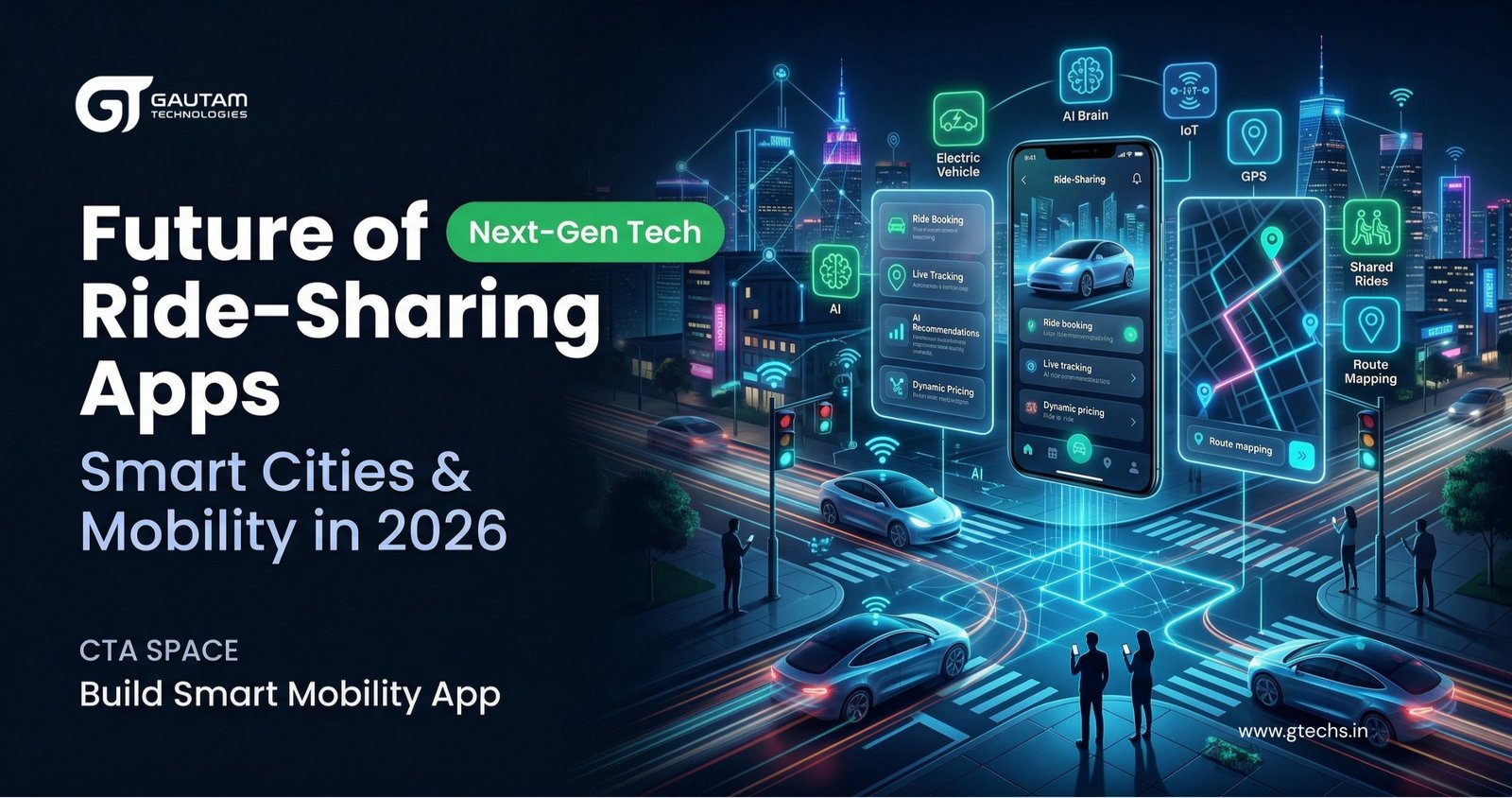
Future of Ride-Sharing Apps in Smart Cities
Authored by
Bandna Kumari
Date Released
12th April, 2026
Urban transportation is changing rapidly as cities adopt digital infrastructure, connected systems, and intelligent mobility networks. The Future of Ride-Sharing Apps in Smart Cities is not just about booking a cab through a mobile phone; it is about creating a seamless, sustainable, and data-driven transportation ecosystem that reduces congestion, lowers emissions, and improves daily commuting for millions of people.
Ride-sharing applications are becoming a core component of smart city mobility solutions. As governments invest in intelligent traffic systems, electric vehicles, IoT-enabled roads, and AI-powered analytics, ride-sharing platforms are evolving into integrated mobility services that connect people with the fastest, safest, and most efficient ways to travel.
This blog explains how technologies like AI in ride-sharing apps, IoT in transportation, electric vehicle ride-sharing, and urban mobility app development are shaping the future of transport in smart cities.
What Are Smart Cities and Why Mobility Matters
A smart city uses technology, data, and digital connectivity to improve infrastructure, public services, and quality of life. Transportation is one of the most critical challenges in urban environments. Traffic congestion, parking shortages, fuel consumption, and air pollution are daily problems for commuters.
Smart city mobility solutions aim to solve these issues by integrating traffic management systems, connected vehicles, smart signals, and real-time data analytics. Ride-sharing apps play a major role here because they reduce the number of private vehicles on roads and optimize vehicle usage.
When multiple users share rides, cities experience less congestion, lower emissions, and better road efficiency. This is why governments and urban planners are encouraging shared mobility platforms as part of smart city development.
Evolution of Ride-Sharing Apps from Basic Booking to Intelligent Systems
Initially, ride-sharing apps were simple platforms for booking taxis. Users entered pickup and drop locations, and drivers accepted requests. Over time, GPS tracking, route optimization, online payments, and driver ratings improved the user experience.
Today, the future of ride-sharing apps in smart cities is moving toward intelligent systems powered by AI and big data. These apps can predict demand, allocate drivers efficiently, and suggest optimal routes based on traffic conditions.
AI in ride-sharing apps allows platforms to learn from past ride data, peak hours, weather conditions, and user behavior. This intelligence transforms a basic cab booking app into a smart urban mobility platform.
Role of AI in the Future of Ride-Sharing Apps
Artificial Intelligence is the backbone of next-generation ride-sharing platforms. AI enables:
- Demand prediction during peak hours
- Smart driver allocation to reduce waiting time
- Dynamic pricing based on traffic and availability
- Personalized ride suggestions for users
- Fraud detection and enhanced security
For example, AI can analyze historical ride patterns to predict where demand will increase in the next 30 minutes. Drivers can be pre-positioned in those areas, reducing idle time and improving customer satisfaction.
AI in ride-sharing apps also improves navigation by studying live traffic feeds and suggesting alternate routes in real time.
How IoT Is Powering Smart Transportation
IoT in transportation connects vehicles, roads, traffic signals, and control systems through sensors and real-time data sharing. Ride-sharing apps integrated with IoT can communicate with smart traffic signals and road sensors.
Connected vehicles send real-time data about speed, fuel usage, and location. This information helps platforms monitor vehicle health, ensure driver safety, and optimize routes.
IoT also enables smart parking, where drivers can find available parking spots instantly, reducing time spent searching for space and lowering traffic congestion.
Electric Vehicle Ride-Sharing and Sustainable Urban Transport
One of the most important aspects of smart city mobility solutions is sustainability. Electric vehicle ride-sharing is gaining momentum as governments promote green transportation.
EV fleets reduce carbon emissions, fuel costs, and noise pollution. Ride-sharing platforms are increasingly adopting electric vehicles for their fleets to align with environmental goals.
Electric vehicle ride-sharing also benefits drivers through lower operational costs and incentives offered by governments. As charging infrastructure improves, EV-based ride-sharing will become the standard in smart cities.
Integration with Public Transport Systems
The future of ride-sharing apps in smart cities includes integration with metro, buses, and other public transport systems. Instead of working separately, ride-sharing platforms will complement public transport.
A user can book a ride to the nearest metro station, take the metro, and then book another ride to the final destination using a single app. This multimodal transportation approach reduces dependency on private vehicles.
Urban mobility app development now focuses on creating platforms that combine different transport options into one seamless experience.
Data Analytics and Predictive Mobility
Data analytics is crucial for understanding traffic flow and commuter behavior. Ride-sharing platforms collect vast amounts of data from rides, routes, timings, and user preferences.
Predictive analytics helps in:
- Forecasting peak demand hours
- Planning driver availability
- Reducing empty rides
- Improving route efficiency
Cities can also use this data to improve road infrastructure and traffic management.
Safety, Security, and Smart Surveillance
Safety is a major concern for ride-sharing users. Advanced ride-sharing apps use AI-based verification, facial recognition, and live ride tracking to ensure passenger safety.
Emergency alert systems, driver background checks, and ride monitoring enhance trust. Smart surveillance integrated with city infrastructure allows authorities to respond quickly in case of emergencies.
Challenges in Implementing Ride-Sharing in Smart Cities
Despite the advantages, there are challenges:
- Regulatory policies and licensing
- Data privacy concerns
- Infrastructure costs for IoT and EV charging
- Driver training and management
- Integration with government systems
Urban mobility app development must address these challenges while building scalable and secure platforms.
Business Opportunities for Startups and Enterprises
The demand for smart city mobility solutions is creating new opportunities for startups and enterprises. Entrepreneurs can invest in ride-sharing platforms that cater to electric vehicles, corporate travel, student transport, and shared logistics.
Urban mobility app development is becoming a high-growth sector as cities seek innovative transportation solutions.
Technologies Required to Build Future Ride-Sharing Apps
To build the future of ride-sharing apps in smart cities, developers use:
- Artificial Intelligence and Machine Learning
- IoT integration
- Cloud computing
- Real-time databases
- GPS and mapping services
- Secure payment gateways
These technologies ensure scalability, reliability, and high performance.
Future Trends to Watch in Ride-Sharing Apps
Several trends will shape the next decade:
- Autonomous vehicles integrated into ride-sharing fleets
- Drone-based urban transport experiments
- Blockchain for secure payments
- Smart parking and traffic signal integration
- Voice-enabled ride booking
Conclusion
The future of ride-sharing apps in smart cities is deeply connected with AI, IoT, electric vehicles, and data analytics. These platforms are no longer simple booking apps; they are intelligent mobility systems that improve urban transportation.
As cities continue to adopt smart technologies, ride-sharing will become the backbone of daily commuting, offering efficient, affordable, and eco-friendly travel options.
Businesses investing in urban mobility app development today will lead the transportation industry tomorrow.
FAQs
1. What is the role of ride-sharing apps in smart cities?
Ride-sharing apps reduce traffic congestion, promote shared mobility, and integrate with smart infrastructure to improve urban transportation.
2. How does AI in ride-sharing apps improve efficiency?
AI predicts demand, optimizes routes, and allocates drivers intelligently to reduce waiting time and improve service quality.
3. Why is electric vehicle ride-sharing important?
It reduces carbon emissions and supports sustainable transportation goals of smart cities.
4. How does IoT in transportation help ride-sharing platforms?
IoT connects vehicles and traffic systems for real-time data exchange and better route management.
5. What technologies are needed for urban mobility app development?
AI, IoT, cloud computing, GPS, real-time databases, and secure payment systems.
Call to Action
If you are planning to build a next-generation ride-sharing or urban mobility platform aligned with smart city standards, now is the right time to invest in advanced app development.
Connect with Gautam Technologies (Gtechs) to discuss your project requirements and build a future-ready ride-sharing solution.
Email: thegtechs@gmail.com
Number: +91 7521878485