
Smart Courier and Logistic Management Application
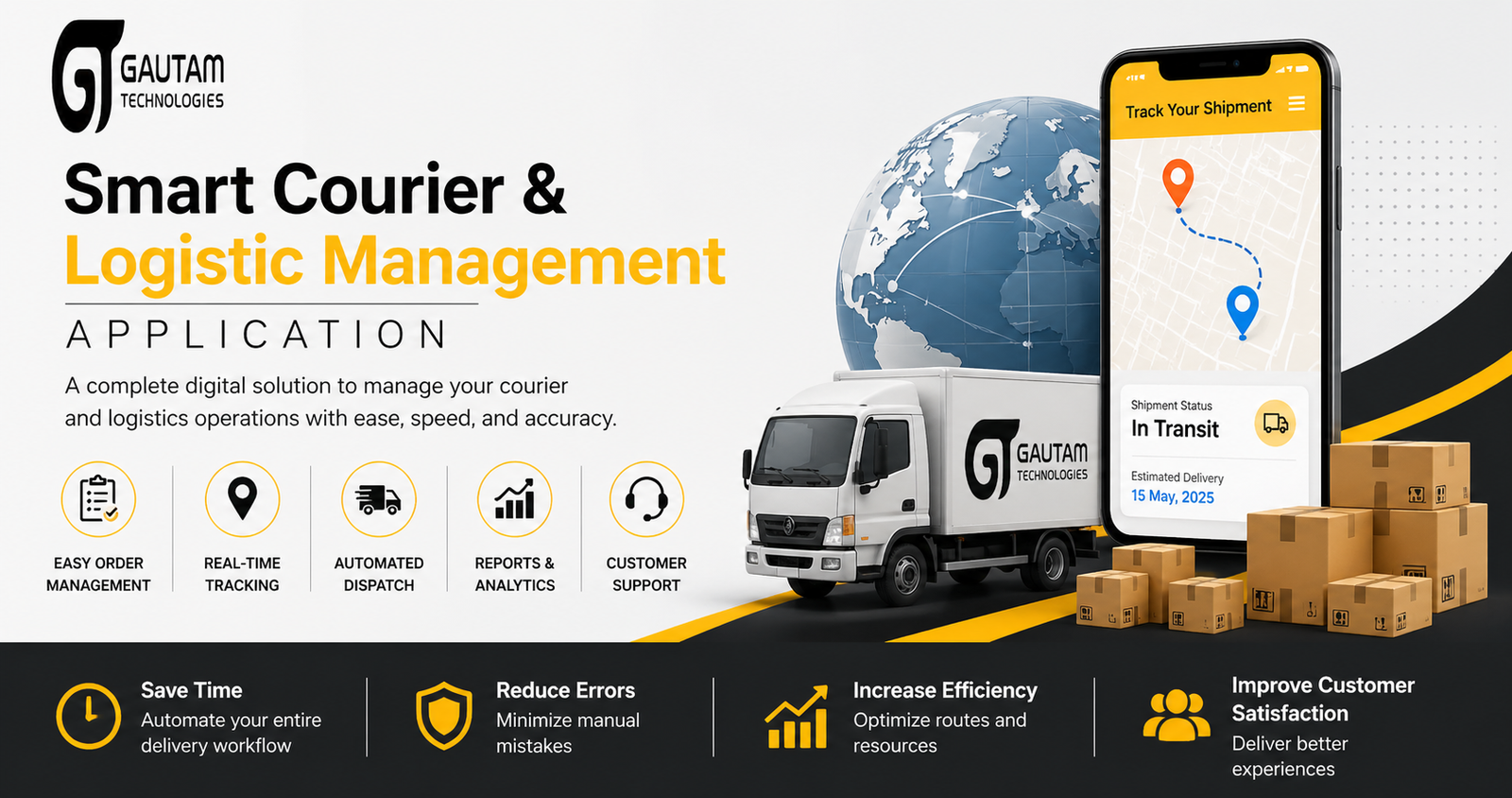
Smart Courier and Logistic Management Application
Authored by
Bandna Kumari
Date Released
26th April, 2026
In today’s fast-paced digital economy, the demand for quick, reliable, and transparent delivery services has increased significantly. Businesses, especially in e-commerce, retail, and supply chain sectors, rely heavily on efficient logistics systems to meet customer expectations. However, traditional courier and logistics management methods often fall short due to manual processes, lack of real-time tracking, and inefficient route planning.
This is where a smart courier and logistic management application comes into play. It revolutionizes how businesses manage deliveries, track shipments, optimize routes, and enhance customer satisfaction.
A smart logistics system combines advanced technologies like artificial intelligence, GPS tracking, and cloud computing to automate operations and improve overall efficiency. In this blog, we will explore everything about smart logistics applications, their features, benefits, technologies, and why businesses must invest in them.
What is a Smart Courier and Logistic Management Application?
A Smart Courier and Logistic Management Application is a digital platform designed to streamline and automate logistics operations. It helps businesses manage shipments, track deliveries, optimize routes, and handle customer communication in real time.
Unlike traditional systems, this application provides complete visibility and control over the entire delivery process. It integrates various components such as mobile apps, web dashboards, and cloud-based systems to ensure smooth operations.
How It Works
- Customers place orders through a platform
- The system assigns deliveries automatically
- Drivers receive route details via mobile apps
- Real-time tracking updates are shared
- Customers receive notifications until delivery completion
Key Features of Smart Courier and Logistics Management Applications
A Smart Courier and Logistic Management Application offers advanced features like real-time GPS tracking, automated order management, AI-based route optimization, inventory control, and instant customer notifications. These capabilities streamline delivery operations, reduce costs, and improve accuracy. Businesses benefit from faster deliveries, better transparency, and data-driven insights, making logistics management more efficient, scalable, and customer-focused in today’s competitive digital environment.
1. Real-Time Tracking
One of the most important features is GPS-based real-time tracking. Businesses and customers can track shipments at every stage of delivery. This improves transparency and trust.
2. Automated Order Management
The system automatically processes orders, assigns deliveries, and schedules shipments. This reduces manual effort and speeds up operations.
3. Route Optimization
Smart applications use AI algorithms to determine the most efficient routes. This helps in saving fuel, reducing delivery time, and improving driver productivity.
4. Inventory and Warehouse Management
The application tracks inventory levels in real time and updates stock automatically. It helps businesses manage warehouses more efficiently.
5. Customer Notifications
Automated alerts via SMS, email, or app notifications keep customers informed about order status, estimated delivery time, and delays.
6. Digital Proof of Delivery
Customers can sign digitally upon receiving the package. Photos and timestamps act as proof of delivery.
7. Payment Integration
Supports multiple payment methods including online payments, wallets, and Cash on Delivery (COD).
8. Analytics and Reporting
Detailed reports help businesses analyze performance, track KPIs, and make data-driven decisions.
Advantages of Smart Courier and Logistic Management Applications
A Smart Courier and Logistic Management Application provides significant advantages for businesses aiming to streamline their delivery operations. It enhances efficiency through automation, reduces operational costs with optimized routing, and minimizes human errors in order processing. Real-time tracking improves transparency, allowing both businesses and customers to monitor shipments easily. These applications also boost customer satisfaction by ensuring faster and more reliable deliveries. Additionally, data analytics helps in making informed decisions, improving overall performance. With scalable features and advanced technology integration, businesses can handle growing demands effectively while maintaining high service quality and staying competitive in the evolving logistics industry.
1. Improved Operational Efficiency
Automation reduces manual work and speeds up logistics operations. Businesses can handle more orders with fewer resources.
2. Cost Reduction
Optimized routes and better resource management reduce fuel costs and operational expenses.
3. Enhanced Customer Experience
Real-time tracking and timely updates improve customer satisfaction and trust.
4. Better Decision Making
Data analytics provides insights into delivery performance, delays, and operational bottlenecks.
5. Reduced Human Errors
Automation minimizes errors in order processing, inventory management, and delivery assignments.
6. Scalability
Smart logistics systems can easily scale as the business grows.
Technologies Used in Smart Logistics Applications
1. Artificial Intelligence (AI)
AI helps in route optimization, demand forecasting, and predictive analytics.
2. Internet of Things (IoT)
IoT devices track vehicle conditions, shipment status, and environmental factors like temperature.
3. Cloud Computing
Cloud-based systems ensure data accessibility, security, and scalability.
4. GPS and Geolocation
GPS enables real-time tracking and accurate delivery updates.
5. Mobile Applications
Driver and customer apps ensure seamless communication and tracking.
Use Cases of Smart Courier and Logistics Applications
A Smart Courier and Logistic Management Application is widely used across industries to streamline delivery operations and improve efficiency. In e-commerce, it helps manage bulk orders and real-time tracking. Retail businesses use it for better inventory and distribution control, while food delivery services depend on it for faster route optimization. In healthcare, it ensures safe and timely delivery of medicines. These applications also support logistics companies in managing fleets, warehouses, and customer communication, making operations more reliable and efficient.
1. E-commerce Industry
Online stores use logistics applications to manage bulk deliveries and provide real-time tracking to customers.
2. Retail Businesses
Retailers use smart logistics for inventory management and faster delivery.
3. Food Delivery Services
Food delivery platforms rely on real-time tracking and route optimization to ensure quick delivery.
4. Healthcare and Pharmaceuticals
Medical deliveries require precise tracking and temperature control, which smart logistics systems provide.
Barriers in Implementing Smart Logistics Systems
Adopting a Smart Courier and Logistic Management Application can face several barriers for businesses. Initial setup costs and system integration with existing tools can be challenging. Data security and privacy concerns also require strong safeguards. Additionally, employee training and adapting to new technology may take time, which can temporarily affect productivity.
While the benefits are significant, businesses may face some challenges:
1. Initial Investment Cost
Developing or implementing a smart logistics system requires a financial investment.
2. Integration Issues
Integrating the system with existing software can be complex.
3. Data Security Concerns
Handling sensitive business and customer data requires strong security measures.
4. Training Requirements
Employees need proper training to use the new system effectively.
How to Choose the Right Smart Logistics Application
Selecting the right Smart Courier and Logistic Management Application requires a clear understanding of your business needs and logistics challenges. Start by evaluating features like real-time tracking, route optimization, and automation capabilities. Ensure the application offers customization to match your workflow and integrates easily with existing systems such as ERP or CRM. A user-friendly interface is essential for smooth adoption by your team. Additionally, consider scalability so the system can grow with your business. Reliable customer support and strong data security features are also important. The right selection will improve efficiency, reduce costs, and enhance overall logistics performance.
Choosing the right solution is crucial for success. Here are some key factors:
1. Understand Business Needs
Identify your logistics challenges and requirements.
2. Customization Options
Ensure the application can be tailored to your business processes.
3. User-Friendly Interface
The system should be easy to use for both staff and customers.
4. Integration Capabilities
It should integrate with your existing ERP, CRM, or e-commerce platforms.
5. Scalability
Choose a solution that can grow with your business.
6. Support and Maintenance
Reliable technical support is essential for smooth operations.
Future Trends in Smart Logistics Technology
The logistics industry is evolving rapidly with new innovations:
1. AI-Powered Predictive Logistics
AI will predict demand, optimize routes, and reduce delivery delays.
2. Drone Deliveries
Drones are being tested for faster and contactless deliveries.
3. Autonomous Vehicles
Self-driving delivery vehicles may soon become a reality.
4. Blockchain Technology
Blockchain ensures transparency and secure transactions in logistics.
5. Green Logistics
Eco-friendly delivery solutions are gaining importance to reduce carbon footprints.
Why Businesses Should Invest in Smart Courier and Logistic Management Applications
Investing in a Smart Courier and Logistic Management Application is no longer optional. It is essential for businesses that want to stay competitive in today’s digital landscape.
With increasing customer expectations for fast and transparent delivery, businesses must adopt advanced logistics solutions. A smart system not only improves operational efficiency but also enhances customer satisfaction and boosts profitability.
Why Choose Gautam Technologies for Smart Logistics Application Development
When it comes to building a powerful and scalable Smart Courier and Logistic Management Application, choosing the right technology partner makes all the difference. Gautam Technologies has established itself as a trusted name in delivering high-quality software solutions tailored to modern business needs.
With over 5+ years of experience in web and mobile app development, the company understands the complexities of logistics operations and provides smart, efficient, and future-ready solutions.
1. Proven Industry Experience
With years of hands-on experience, Gautam Technologies has successfully delivered multiple projects across industries including logistics, e-commerce, and enterprise solutions. This expertise ensures your application is built with the latest technologies and best practices.
2. Customized Solutions for Your Business
Every business has unique logistics requirements. Gautam Technologies offers fully customized solutions designed specifically to match your workflow, ensuring maximum efficiency and performance.
3. Advanced Technology Integration
From AI-powered route optimization to real-time GPS tracking and cloud-based systems, the company integrates modern technologies to deliver high-performing logistics applications.
4. User-Friendly Design
The focus is not just on functionality but also on creating intuitive and easy-to-use interfaces for both administrators and end users.
5. Reliable Support and Maintenance
Gautam Technologies provides ongoing support and maintenance services to ensure your application runs smoothly without disruptions.
6. Cost-Effective Development
Get high-quality solutions at competitive pricing, making it suitable for startups, small businesses, and enterprises alike.
7. Scalable and Future-Ready Solutions
Applications are designed to grow with your business, allowing easy upgrades and feature expansions as your operations expand.
Conclusion
The logistics industry is undergoing a major transformation with the adoption of smart technologies. A Smart Courier and Logistic Management Application helps businesses automate processes, reduce costs, and deliver exceptional customer experiences.
From real-time tracking to AI-powered route optimization, these applications provide a complete solution for modern logistics challenges. Businesses that invest in smart logistics systems today will be better positioned for future growth.
If you are looking to develop a powerful and scalable logistics application, choosing the right technology partner is crucial. Gautam Technologies offers expert solutions to build smart, efficient, and customized logistics applications tailored to your business needs.
For more information:
Email: gtechs@gmail.com
Contact: +91 7521878485
FAQs
1. What is a logistics management application?
It is a software solution that helps manage and optimize delivery operations, inventory, and shipments.
2. How does real-time tracking work?
It uses GPS technology to track the location of delivery vehicles and update the status in real time.
3. Is it suitable for small businesses?
Yes, smart logistics applications are scalable and can be used by businesses of all sizes.
4. What is the development cost?
The cost depends on features, complexity, and customization requirements.